
The indie-friendly, privacy-respecting ad network
Earn from free users. Promote your app. Skip the creepy ad-tech baggage.
Indie developers usually end up on both sides of ads — trying to earn something from free users and trying to get more people to try their apps. Guild Ads keeps it simple: one account, one app, both directions.
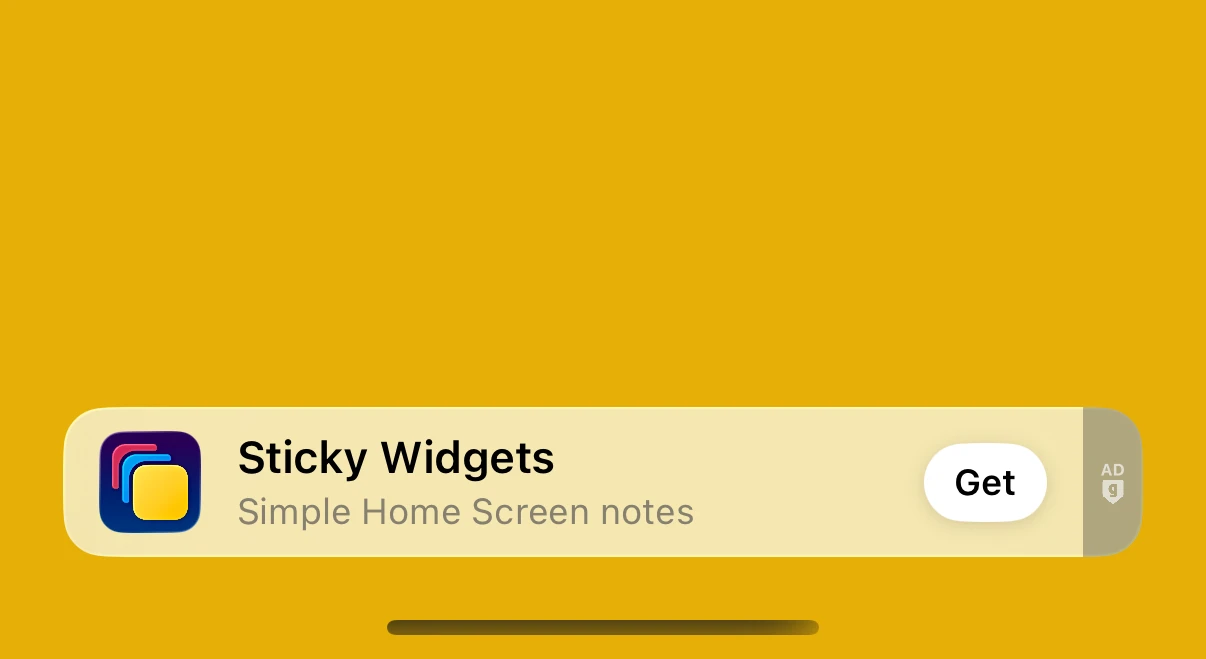
Actual in-app ad
Live network snapshot
Advertisers
4
Confirmed this week
Publisher apps
22
Active in the last 7 days
Publisher users
34,983
Summed app uniques, last 7 days
Two outcomes, one account
Most indie apps end up doing both. Same login, same dashboard.
- Buy a clear share of next week instead of fighting bids every day.
- Show lightweight creative in apps that feel closer to yours.
- Keep the setup privacy-respecting instead of borrowing the usual surveillance stack.
Same account also earns from your free users — turn it on whenever you want.
Start Advertising- Add one static, labeled slot that fits naturally in a free tier.
- Get paid from real advertiser spend instead of fuzzy network math.
- Keep the ad-free upgrade path clean, with bonus credits when you promote your own apps.
Same account also promotes your app — turn it on whenever you want.
Start PublishingWhy this feels less icky than typical ad tech
Fewer moving parts, less clutter, and fewer things you have to apologize for later.
How the weekly marketplace works
The short version of how ads run, publishers get paid, and next week's price gets set.
See the weekly math
Guild Ads has one weekly network price. Use the sample apps below to see how advertiser share and publisher reach move money through the system.
App A
Trail Notes
App B
Echo Harbor
App C
Goal Grid
App D
ShopSprint
$10,000
App A
Trail Notes
40% - $4,000
$10,000 * 40% = $4,000
App B
Echo Harbor
40% - $4,000
$10,000 * 40% = $4,000
App C
Goal Grid
20% - $2,000
$10,000 * 20% = $2,000
App B
Echo Harbor
30% - $2,100
$7,000 * 30% = $2,100
App C
Goal Grid
30% - $2,100
$7,000 * 30% = $2,100
App D
ShopSprint
40% - $2,800
$7,000 * 40% = $2,800
Publisher payout pool: $7,000 ($10,000 cash spend * 70%)
App B
Echo Harbor
Ad spend: $4,000
Payout: $2,100
Net: $1,900 owed
App C
Goal Grid
Ad spend: $2,000
Payout: $2,100
Net: $100 received
In this scenario, App B only pays the difference: $1,900. App C gets paid out $100 after covering ad spend.
Distinct users are counted within each app to avoid cross-app tracking. Bonus publisher credits are not shown here.
Prefer the CLI directly? It's guild-ads on npm. Or click around the dashboard — all three paths land in the same place.
Simple math on both sides
Advertisers know what they bought. Publishers can see where cash and credits come from.
Want a cleaner way to grow or earn from an app?
Promote your app, earn from free users, or do both without dragging in a giant ad stack.
Advertiser setup works for App Store apps and websites. Publisher setup is iOS-only for now.